

Speckled trout are one of those fish that can make you feel like you have the perfect lure one day and absolutely no clue the next.
That usually isn't because trout suddenly developed expensive taste in tackle.
More often, the fish changed depth, forage, or feeding behavior — and the lure that worked yesterday is no longer reaching them the right way.
So instead of memorizing a giant list of “best speckled trout lures,” I want to give you a much simpler system:
Figure out where the trout are feeding first. Then choose the lure that naturally reaches that part of the water column.
For speckled trout, start with a topwater when fish are actively feeding near the surface, a paddletail when you need to cover the middle of the water column, and a soft plastic on a jighead when trout are holding deeper. A shrimp imitation is especially useful when trout are feeding around grass, current, creek mouths, or shrimp-heavy areas. Depth and presentation matter more than constantly changing lure colors.

The Simple Speckled Trout Lure Cheat Sheet
| What You're Seeing | Start With | Why |
|---|---|---|
| Surface bait / early morning activity | Walking topwater | Covers water quickly and targets fish willing to look up |
| Trout chasing bait in 1–3 ft | Paddletail on a light weighted hook or jighead | Keeps a baitfish profile moving through the strike zone |
| Grass or snaggy shallow water | Weedless soft plastic | Lets you fish cleanly without constantly fouling the hook |
| Deeper potholes / ledges / channels | Soft plastic on a jighead | Gets the lure down and helps maintain depth |
| Shrimp present / fish holding near current | Shrimp imitation | Matches a common trout food source and can be worked slowly |
1. Topwater: When Trout Are Looking Up
Few things are more fun than watching a trout explode on a topwater.
But topwater is not automatically the best choice just because you want the most exciting bite.
I would reach for it when the conditions tell me the fish are willing to come up:
- early morning or lower-light conditions
- overcast skies
- bait getting pushed or popped at the surface
- active fish spread across a flat
- wind or current concentrating bait around a point or edge
A walking-style topwater is valuable because it lets you cover a lot of water.
If you're trying to locate trout across a big flat, that matters.
But pay attention to what the fish tell you.
If trout keep swiping underneath the plug without committing, that is often a good clue to follow up with a subsurface lure rather than throwing the same topwater for another 30 minutes.
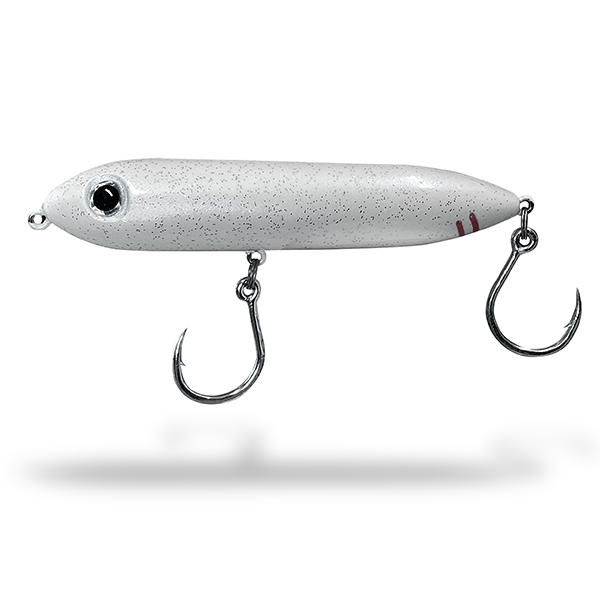
A walking topwater like the Moonwalker is the type of lure I'm talking about here. The important part is the presentation: use it when trout are feeding high and you need to search shallow water efficiently.
See the topwater setup →How fast should you work a topwater for trout?
Start with a steady walking cadence, but don't be afraid to add pauses.
Some days trout want a lure moving aggressively.
Other days the pause is what gets the bite.
If you have followers but no commitment, change the cadence before you immediately change the lure.
2. Paddletails: The All-Around Trout Search Bait
If I wanted one lure style that could cover the widest range of everyday trout situations, a paddletail would be near the top of the list.
The reason is versatility.
You can:
- swim it steadily over grass
- slow-roll it deeper
- let it fall into potholes
- bounce it near the bottom
- speed it up when fish are chasing bait
And you can make one paddletail fish completely differently simply by changing the weight underneath it.
That is much more useful than carrying twelve different lure styles and never learning how any of them behave.

The 2.0 paddletail is a good example of this style of lure.
The point isn't that trout only eat one particular paddletail.
The point is learning how to control the lure's depth.
Don't automatically reel it as fast as possible
A lot of anglers throw a paddletail out and immediately start winding.
That works when fish are aggressive.
But if trout are sitting over deeper grass or in potholes, that retrieve can pull the lure above the strike zone before they ever get a good look at it.
Try letting it fall.
Slow the retrieve.
Add a pause.
The fish may not need a different lure. They may need the same lure six inches lower.
3. Shrimp Imitations: When Trout Are Feeding Lower or Around Current
Speckled trout absolutely eat baitfish, but don't overlook shrimp.
A shrimp profile can be especially useful around:
- grass edges
- creek mouths
- current seams
- deeper potholes
- areas where you're visibly seeing shrimp
The big advantage is that a shrimp imitation doesn't have to be burned through the water to look alive.
You can slow it down.
Let it fall.
Give it short hops.
Or let current help move it naturally.

The Prawn Original gives you a different profile from a paddletail and can be rigged for shallow cover or deeper presentations depending on the hook or jighead underneath it.
See the shrimp profile →If you want a deeper breakdown of shrimp presentations, read our Shrimp Lures for Redfish, Trout & Snook guide.
The Most Important Decision: How Deep Are the Trout?
This is where lure selection gets much easier.
Before you ask which lure color to use, ask:
Where are the fish in the water column?
Surface: topwater
Shallow / over grass: paddletail or shrimp on a weighted weedless hook
Middle of the water column: paddletail with enough weight to stay down
Deeper potholes / channels: soft plastic on a jighead
Shallow grass: use enough weight — but not too much
If the trout are holding over shallow grass, too much weight can turn a perfectly good lure into a salad rake.
This is where a weighted weedless hook can make sense because it lets the soft plastic stay above and move through vegetation with fewer hang-ups.
The Hoss Helix is the shallow weedless example we use throughout our rigging guides.
Deeper water: switch to a jighead
Once trout slide into deeper potholes, troughs, channels or open water, I usually care more about getting the lure down and maintaining depth.
That's where a traditional jighead becomes useful.

A Hoss Round Eye Jighead is the style I'm talking about.
One inventory note as of this article's publication: not every hook-size/weight combination is currently available, so check the live options on the product page rather than assuming every variation is in stock.
If you're unsure when to choose one over the other, our Weighted Weedless Hooks vs Jigheads guide breaks the decision down by depth and cover.
Does Water Clarity Change the Best Trout Lure?
Yes — but probably not in the way a lot of anglers think.
Water clarity should influence presentation, not just send you digging through the tackle box for another color.
Clear and calm water
When the water is clean and calm, trout can get a very good look at your lure.
That usually makes me think about:
- a more natural presentation
- less unnecessary commotion
- longer casts
- slowing down if fish are following but not eating
Stained or dirtier water
When visibility drops, vibration and water displacement can become more important.
A paddletail is useful here because the tail is constantly moving water during the retrieve.
That does not mean you need the loudest lure in the box.
It means your lure should give the fish enough information to find it.
Match the Lure Size to the Bait
One of the easiest mistakes to make with trout is getting so focused on lure color that you ignore lure size.
If the area is full of small baitfish, a smaller profile may look much more natural.
When larger bait becomes abundant, especially during seasonal bait migrations, stepping up the profile can make more sense.
Don't overcomplicate this.
Look at what the trout are actually eating.
If bait is spraying everywhere and it's two inches long, throwing the biggest lure in your box just because somebody called it a “big trout lure” probably isn't your first move.
Should You Use a Skinny Lipper for Trout?
A shallow subsurface lure fills an important gap between topwater and soft plastics.
If trout are reacting to a topwater but refusing to fully commit, moving just below the surface can be a very useful adjustment.
That's where a lure such as the Skinny Lipper fits into the system.
You are still covering water and presenting a baitfish profile, but you're no longer asking the fish to break the surface to eat it.
That can be a much smaller change than abandoning the entire pattern and digging out a completely different lure.
What About Lure Color?
Color matters.
It just doesn't deserve to be the first decision.
Start here:
- Are the trout here?
- What depth are they feeding?
- What are they eating?
- How fast do they want the lure?
- Then fine-tune color.
If you reverse that order, you can spend an entire morning swapping colors while your lure is two feet above the fish.
5 Speckled Trout Lure Mistakes to Avoid
1. Changing lures before changing depth
This is probably the biggest one.
Before cutting off a perfectly good soft plastic, change the weight, retrieve speed or sink time.
2. Fishing every paddletail with the same retrieve
Trout do not always want a steady retrieve.
Use pauses, drops and speed changes.
3. Staying on topwater too long
Topwater is fun.
But if the surface bite dies when the sun gets higher, don't force it for another two hours just because you want another explosion.
4. Ignoring current
Current can position both bait and trout.
Points, creek mouths, cuts and edges that funnel moving water deserve attention.
5. Thinking the “best lure” fixes a bad spot
No lure makes up for fishing dead water.
Finding feeding fish still matters more than what logo is printed on the bait.
Choose your trout lure by depth first. Surface fish get a topwater. Shallow fish get a lightly weighted presentation. Deeper fish get a jighead. Then adjust profile, retrieve and color based on bait and water conditions.
A Simple 3-Lure Speckled Trout Box
If you wanted to keep your trout box ridiculously simple, I would build it around three presentations:
| Water Column | Lure Type | Example |
|---|---|---|
| Surface | Walking topwater | Moonwalker |
| Middle / search bait | Paddletail | The 2.0 |
| Lower / shrimp-oriented | Shrimp imitation | Prawn Original |
Then carry a few weighted weedless hooks and jigheads so you can move those soft plastics up or down without rebuilding your entire tackle box.
That is a much more useful system than carrying twenty lure styles and hoping one of them magically solves the problem.
Speckled Trout Lures FAQ
What is the best lure for speckled trout?
There is no single best lure for every situation. Topwaters are useful when trout are feeding near the surface, paddletails are versatile search baits through the middle of the water column, and soft plastics on jigheads are better when fish move deeper.
What color lure is best for speckled trout?
Start with depth, bait size and presentation before obsessing over color. In clear water, natural-looking presentations can make sense. In dirtier water, contrast and vibration may help fish locate the lure. Color should fine-tune a good presentation, not replace one.
Are paddletails good for speckled trout?
Yes. Paddletails are one of the most versatile artificial lure styles for trout because you can fish them shallow or deep simply by adjusting weight, sink time and retrieve speed.
When should I use topwater for speckled trout?
Topwaters are especially useful when trout are actively feeding near the surface, often during lower-light periods, overcast conditions or when bait is visibly being pushed on top.
What size jighead should I use for speckled trout?
Use the lightest jighead that still lets you reach and maintain the depth where the fish are feeding. Shallow flats generally call for lighter weights, while deeper potholes, channels, wind or current can require more weight.
Are shrimp lures good for speckled trout?
Yes. Shrimp are a natural forage item for speckled trout, and shrimp imitations can work especially well near grass, current, creek mouths and areas where shrimp are visibly present.
Should I use a weedless hook or jighead for trout?
Use a weighted weedless hook when fishing shallow grass or snag-prone cover. Use a traditional jighead when you need more depth or better bottom contact in relatively clean water.
Do big speckled trout need bigger lures?
Not always. Larger profiles can make sense when bigger forage is abundant, but matching the available bait and presenting the lure at the correct depth is usually more important than simply throwing the biggest lure in the box.
Keep Your Trout Lure Selection Simple
If you're standing on the boat wondering what to tie on, don't start by staring at twenty lure colors.
Look at the water.
Are fish feeding on top?
Are they cruising over grass?
Are they holding down in potholes?
Are shrimp popping around the shoreline?
Answer that first.
Then choose the presentation that reaches them naturally.
The best speckled trout lure is usually the one you can put in the right part of the water column and make look like an easy meal.
Once you choose the lure, the next decision is whether you need a weighted weedless hook or a jighead. That choice comes down mostly to depth and cover.