

If you are new to inshore fishing, the biggest mistake I see is trying to learn everything at once. One rod for this lure, another reel for that situation, five different leader sizes, a box full of colors — it gets overwhelming fast.
When I am helping a newer angler get comfortable, I want the opposite. I want one balanced inshore fishing setup that lets you make a good cast, feel what your lure is doing, and cover enough water to learn where the fish are actually holding.
This is the same kind of starting point I would talk through with a new angler on the boat or someone in the Salt Strong community who is trying to simplify their tackle. You can always add specialized gear later. First, learn one setup well.
Coach's starting point
A simple beginner inshore fishing setup
- Rod: 7'6" medium-power, fast-action spinning rod
- Reel: 2500-size spinning reel
- Main line: around 10 lb braided line
- Leader: roughly 15-20 lb mono or fluorocarbon to start
- Shallow rigging: weighted weedless hook
- Deeper rigging: jighead
- Core lures: paddletail, shrimp imitation, and topwater lure
Jump to what you need
What Size Rod and Reel Should a Beginner Use for Inshore Fishing?
If you only want one setup to learn on, I like a 7'6" medium-power spinning rod with a 2500-size spinning reel. It is light enough to cast all morning without wearing yourself out, but still gives you a useful amount of backbone for common inshore fish like redfish, trout, and snook.
More importantly, it is a very forgiving combination. You can throw a paddletail, shrimp imitation, small topwater plug, or a jighead without needing to change your whole outfit.
What I tell newer anglers:
Do not get hung up on chasing the “perfect” rod. Your first goal is a balanced setup that feels comfortable enough that you actually learn to cast, work the lure, and fight fish with it.
The rod setup I would start with
A good example is the Slam Stick Spinning Rod. The medium version is 7'6", fast action, rated for 8-15 lb line and 1/4-3/4 oz lures, and built around 2500-3000 size spinning reels.
Those specs are why I like it as an example here: it sits right in the middle of the range most newer inshore anglers need instead of pushing you toward something overly light or overly heavy.


The reel size I would pair with it
A 2500-size reel is my favorite place to start for this kind of light inshore fishing. The Otis 2500 is the reel I am referencing here. It weighs 7 oz, has 14 lb of drag, and is designed around roughly 6-15 lb braid.
You do not have to use that exact reel to follow the guide. The important part is the 2500-size class, the balance with your rod, and a smooth drag. If you already own something comparable, use it. If you are still deciding, you can compare a few saltwater spinning reels here.
What Is the Best Inshore Rod and Reel Combo?
For a beginner, I care less about the logo on the rod and more about whether the pieces actually work together. A 7'6" medium rod, 2500-size reel, and light braid is a very practical all-around combination.
If you want to see the exact rod-and-reel pairing I am describing instead of piecing it together from the specs, this inshore combo is the setup I am using as the reference point in this guide.
What Pound Braid Should You Use for Inshore Fishing?
For this setup, I would start around 10 lb braid. It casts well on a 2500 reel, gives you plenty of sensitivity, and is more than enough for a lot of everyday inshore fishing when your drag and leader are set up correctly.
A lot of newer anglers jump straight to heavier line because saltwater fish sound intimidating. The downside is that heavier line can cost you casting distance and make light presentations feel clunky. I would rather teach someone to use the drag and fight the fish than automatically spool everything with 30 lb braid.
If you need a spool and want the exact braid I am talking about, Daiwa J-Braid x8 Grand is a solid option we keep available. I am linking it so you can check the sizes, not because the brand name is the most important part. Get the line size right first.
Do you need a leader with braid?
Most of the time, yes. Braid is great as a main line, but I still want a separate leader between the braid and the lure.
For a newer angler, I would usually start around 15-20 lb leader. Then I adjust based on what is in front of me. Clear open water? I may lighten up. Oysters, docks, mangroves, rocks, or bigger snook? I start thinking heavier.
If you need a simple mono leader to get started, Ande Premium Monofilament Leader is an easy example. Again, focus on the pound test that fits the situation more than the label on the spool.


Weighted Weedless Hook or Jighead?
This is one of the first rigging decisions I want a new angler to understand because it teaches you how to control depth without buying a completely different lure.
Shallow, grassy, or snaggy
Start with a weighted weedless hook. It helps your soft plastic come through grass and cover with fewer hang-ups.
Deeper or relatively clean water
A jighead makes it easier to get down and maintain depth with an exposed hook.
For shallow water: Hoss Helix weighted hooks
The Hoss Helix is the weighted weedless hook I am using for the examples in this guide. The current general depth ranges are:
- 1/16 oz: roughly 0.5-1.5 ft
- 1/8 oz: roughly 1-2.5 ft
- 3/16 oz: roughly 1.5-3 ft
Treat those as a starting point, not a law. Current, retrieve speed, lure shape, and line angle all change how deep the bait actually runs.
For more depth: Hoss Round Eye Jighead
When I want the same soft plastic to fish deeper, I would move to something like the Hoss Round Eye Jighead. The current general depth guidance is:
- 1/8 oz: roughly 1-3 ft
- 3/16 oz: roughly 2-4 ft
- 1/4 oz: roughly 3-8 ft


Remember this on the water
Shallow + grass or cover = weighted weedless hook.
Deeper + open water = jighead.
Three Inshore Fishing Lures I Would Give a Beginner
You do not need twenty lure styles on your first few trips. I would rather see you learn three different presentations that cover three different parts of the water column.


1. Start with a paddletail
If I could only hand a new angler one soft plastic to practice with, a paddletail would be high on the list because it teaches so much. You can swim it steadily, slow-roll it, add pauses, or let it drop deeper simply by changing your retrieve and weight.
The 2.0 Original Slam Shady is 3.5" and works on both weighted hooks and jigheads, which is exactly why it fits this beginner system.
2. Add a shrimp imitation
Next I want you to have something that looks and moves differently. A shrimp imitation gives you that without making your tackle box complicated.
The Prawn Original is the shrimp profile I am using here. It is 4.3" long and can be rigged weedless or on a jighead depending on depth and cover.
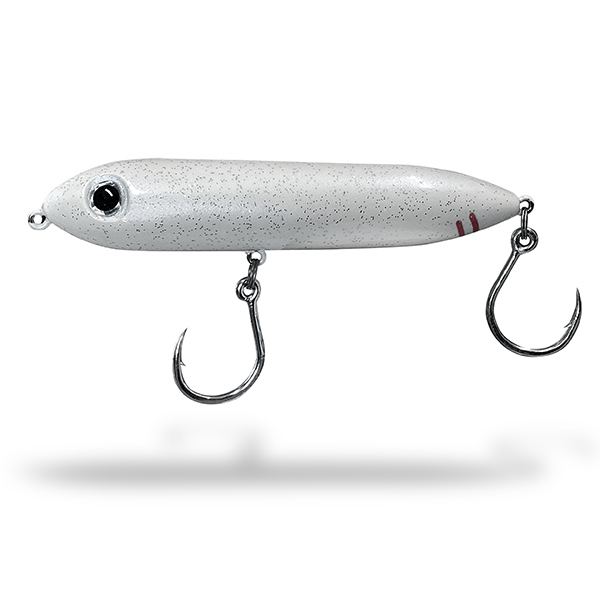
3. Add topwater once you are comfortable
Topwater is not something you have to master on day one, but it is worth learning because it lets you cover the surface and teaches you how fish react to sound, cadence, and pauses.
The Moonwalker is the walking-style topwater I am using as the example. It is 4" long and weighs 0.42 oz.
Think of your lure box vertically
Surface: topwater
Middle: paddletail
Lower / shrimp presentation: shrimp imitation
Optional: a popping cork
A popping cork is not required for the basic artificial-lure setup, but I like it as an optional tool because it gives a new angler another way to control depth and add surface disturbance without needing a complicated rig.

Dr. Popper Cork
If a popping cork fits the way you want to fish, this is the style I am talking about.
See how this cork is set up →How Do You Choose the Right Lure for the Conditions?
Instead of asking, “What color should I throw?” start with a better question:
Where in the water column are the fish likely feeding?
- If you are seeing surface activity, start with topwater.
- If fish are chasing baitfish through the middle, try a paddletail.
- If fish are holding low or feeding around shrimp-oriented habitat, try the shrimp imitation.
Then use hook or jighead weight to fine-tune depth. That is a much more useful system than changing lure color every few casts without knowing what problem you are trying to solve.
A Simple Beginner Inshore Tackle Box
If you were meeting me at the ramp tomorrow and told me, “I am new — just tell me what I actually need,” this is the kind of list I would give you:
| Category | Starting point | Example used in this guide |
|---|---|---|
| Rod | 7'6" medium, fast action | Slam Stick |
| Reel | 2500-size spinning reel | Otis 2500 |
| Braid | Around 10 lb | Daiwa J-Braid x8 Grand |
| Leader | 15-20 lb starting range | Ande Mono Leader |
| Shallow rigging | Weighted weedless hook | Hoss Helix |
| Deeper rigging | Jighead | Hoss Round Eye |
| Lures | Paddletail, shrimp, topwater | The 2.0, Prawn Original, Moonwalker |
Common Beginner Inshore Fishing Mistakes
Buying too much tackle too soon
More lures do not automatically mean more fish. I would much rather see you understand three presentations than carry thirty baits you do not know how to fish.
Fishing every lure at the same depth
This is a big one. Sometimes the lure is fine; it is just not where the fish are. Before changing baits, try changing weight, retrieve speed, or how long you let the lure sink.
Using line that is heavier than the situation calls for
Heavier is not automatically safer or better. Match the line to the rod, reel, structure, and fish you are targeting. For the setup in this guide, 10 lb braid is a practical starting point.
Paying more attention to the lure than the spot
Grass edges, current seams, mangroves, docks, oysters, drop-offs, and moving water usually matter more than having one more lure color in the box. Learn to read the water and your tackle choices get easier.
Beginner Inshore Fishing Setup FAQ
What size reel is best for inshore fishing?
A 2500-size spinning reel is an excellent starting point for light inshore fishing. It balances well with many medium and medium-light rods and is comfortable enough to cast for long periods.
Is a 2500 reel big enough for redfish and snook?
For many everyday inshore situations, yes. Heavy structure and exceptionally large fish can justify moving to larger tackle, but a properly matched 2500 setup can handle a lot more than most beginners expect.
What is the best size rod for inshore fishing?
For one all-around spinning setup, 7'6" is a very useful length because it gives you good casting distance while still being manageable around structure.
What pound braid should I use on a 2500 reel?
For the light inshore setup in this guide, I would start around 10 lb braid. Adjust heavier when structure, fish size, or the specific reel setup gives you a reason.
What pound leader should I use for inshore fishing?
A 15-20 lb leader is a good general starting range. I would lighten up in clear, open water and move heavier around abrasive structure or larger fish.
What are the best inshore fishing lures for beginners?
Start with three lure types: a paddletail, a shrimp imitation, and a topwater lure. That gives you different presentations for the surface, middle, and lower parts of the water column without carrying a giant tackle box.
Do I need both jigheads and weighted weedless hooks?
I would carry both. Weighted weedless hooks are very useful in shallow grass and snag-prone cover, while jigheads make it easier to reach deeper water and fish an exposed-hook presentation.

Keep it simple
You do not need more tackle. You need a setup you understand.
If you want to skip the guesswork, this is the exact rod-and-reel pairing I used as the example throughout the guide. You can use it as-is, compare the specs to gear you already own, or build the setup one piece at a time.
See the setup used in this guide Browse the lure styles mentioned